Penny items are real.
Products ring up at $0.01 at the Home Depot register because the SKU hit the floor of the internal markdown system — even while the shelf still shows full retail.
Penny items are real: products that ring up at $0.01 at the register while the shelf still shows full retail. This free playbook covers what they are, why the app hides them, how real shoppers document four-figure hauls for pocket change, and how to hunt them yourself — respectfully and legally.
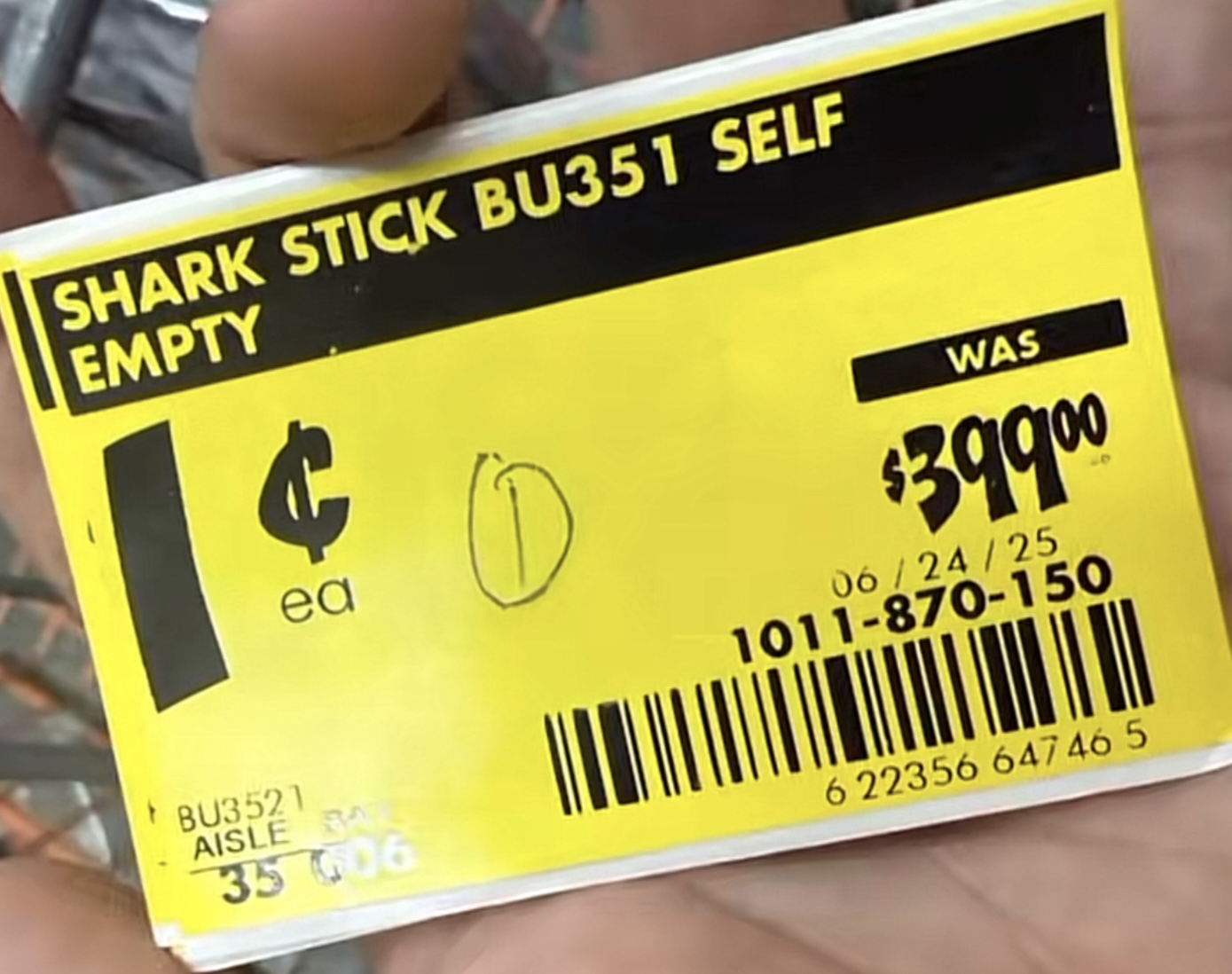
Products ring up at $0.01 at the Home Depot register because the SKU hit the floor of the internal markdown system — even while the shelf still shows full retail.
A penny SKU usually shows as “unavailable,” out of stock, or full price in the app. The register is the only surface that tells the truth.
Penny pricing is set per store and changes daily. Lists on Reddit or random blogs are stale within hours of being posted.
The window between a SKU dropping to a penny and an employee pulling it off the floor can be minutes. A live tracker with alerts is the head start.
Tools, ceiling fans, vanities, tile, smoke detectors, paint, garden, and seasonal are the most consistent penny categories.
The system price is the legal price. Paying what the register asks is a normal retail transaction — shoppers resell penny finds for retail margin every day.
Penny items — also called penny deals or penny clearance — are products marked down in Home Depot’s internal SKU system to one cent. The shelf may still show the original price. The website may still show the original price. But when the item hits the register, it rings up at $0.01, and the customer walks out with it.
This happens because every SKU rides a continuous markdown cycle. When products discontinue, packaging refreshes, or inventory has to clear, the system can push the price all the way to the $0.01 floor. Most shoppers never know — only the ones who verify at the register find out.
A product marked down to $0.01 in Home Depot’s internal SKU pricing system. The shelf still shows retail; the register charges one cent. Also called a penny deal or penny clearance.
The internal Home Depot product number for an item currently priced at $0.01 in the register system. Every product has a SKU — a penny SKU is just one sitting at its absolute price floor.
The deepest stage of Home Depot’s continuous markdown cycle. Used interchangeably with penny item or penny deal — the state of being on one-cent pricing.
A list of confirmed SKUs currently at $0.01. Home Depot publishes no official list, and public lists go stale within hours. Live lists only exist inside communities that track pricing continuously.
Software that watches Home Depot SKU pricing and flags the moment an item drops to $0.01. The Home Depot app hides penny prices, so a separate tracker is the only way to know before you drive.
Everything one shopper buys in a single trip at penny pricing. Hauls worth $1,000–$2,000 in retail value, bought for under a dollar, are documented every week.
Four documented penny hauls, all from April 29, 2026 — real photos, real carts, real register receipts. Card numbers and transaction codes are redacted; the SKUs, item names, and $0.01 line items are untouched. This is what the receipts actually look like.
“Almost 1800 worth not a bad haul let about 5 behind for someone else”
This is the haul that proves the whole point. On April 29, 2026, Andydeal1 scanned one SKU that had dropped to a penny and rang up 21 two-packs of Universal Security Instruments combination smoke and carbon monoxide detectors — 42 detectors at $0.01 each. Each two-pack retails for $79.99.
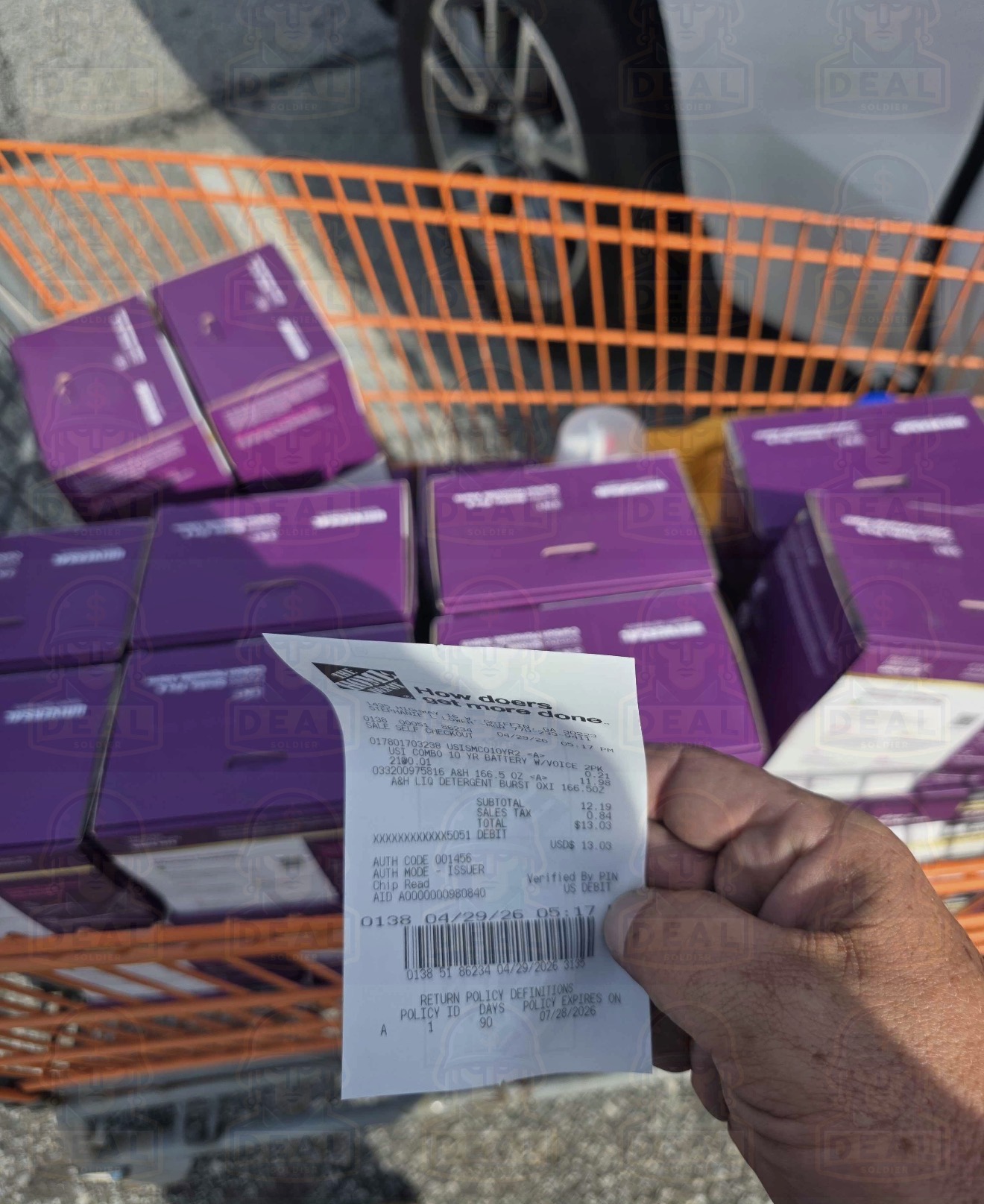
Every customer-facing surface still showed full price. The app said $79.99. The shelf said $79.99. The only place the penny showed up was the register — which is exactly how penny pricing works.
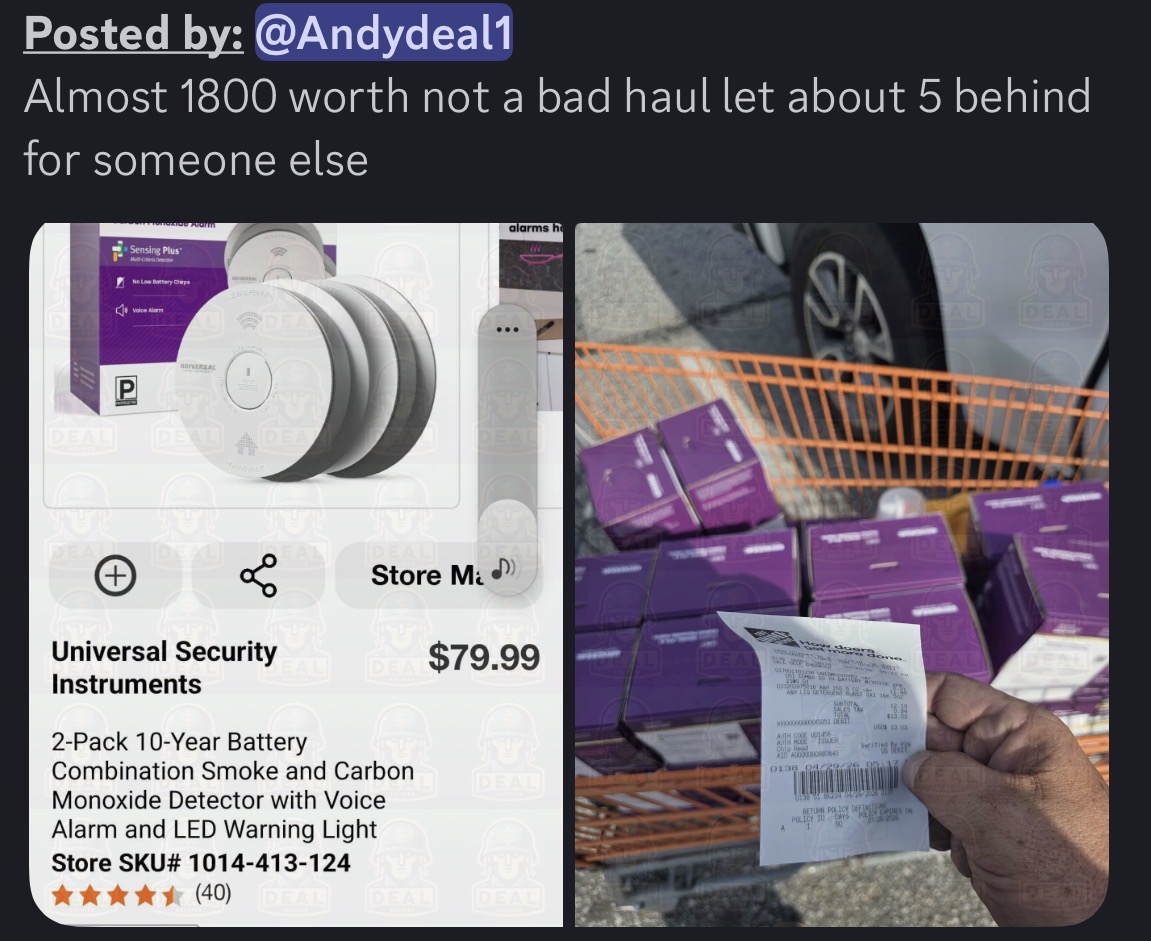
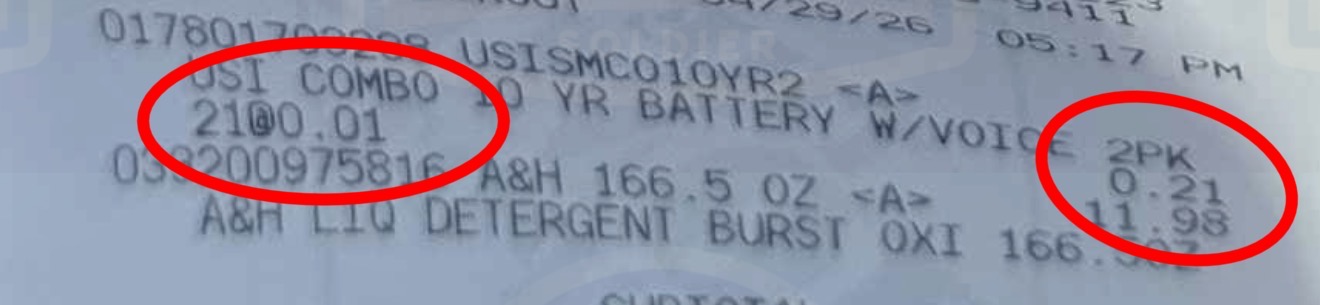
The receipt line reads “USI COMBO 10 YR BATTERY W/VOICE 2PK — 21 @ $0.01.” That is $0.21 paid for $1,679.79 in retail value: name-brand detectors with 10-year sealed batteries and voice alarms, enough to outfit an apartment building or 20 rental properties. And he still left five packs on the shelf for the next shopper.
“Finally got my penny vanity!”
TokenJack had been hunting a penny vanity for weeks. On April 29, 2026 at 5:53 PM, a Glacier Bay Hampton 30-inch white vanity cabinet dropped to $0.01 in the system. He rang it up, paid one cent, and loaded it into his truck.
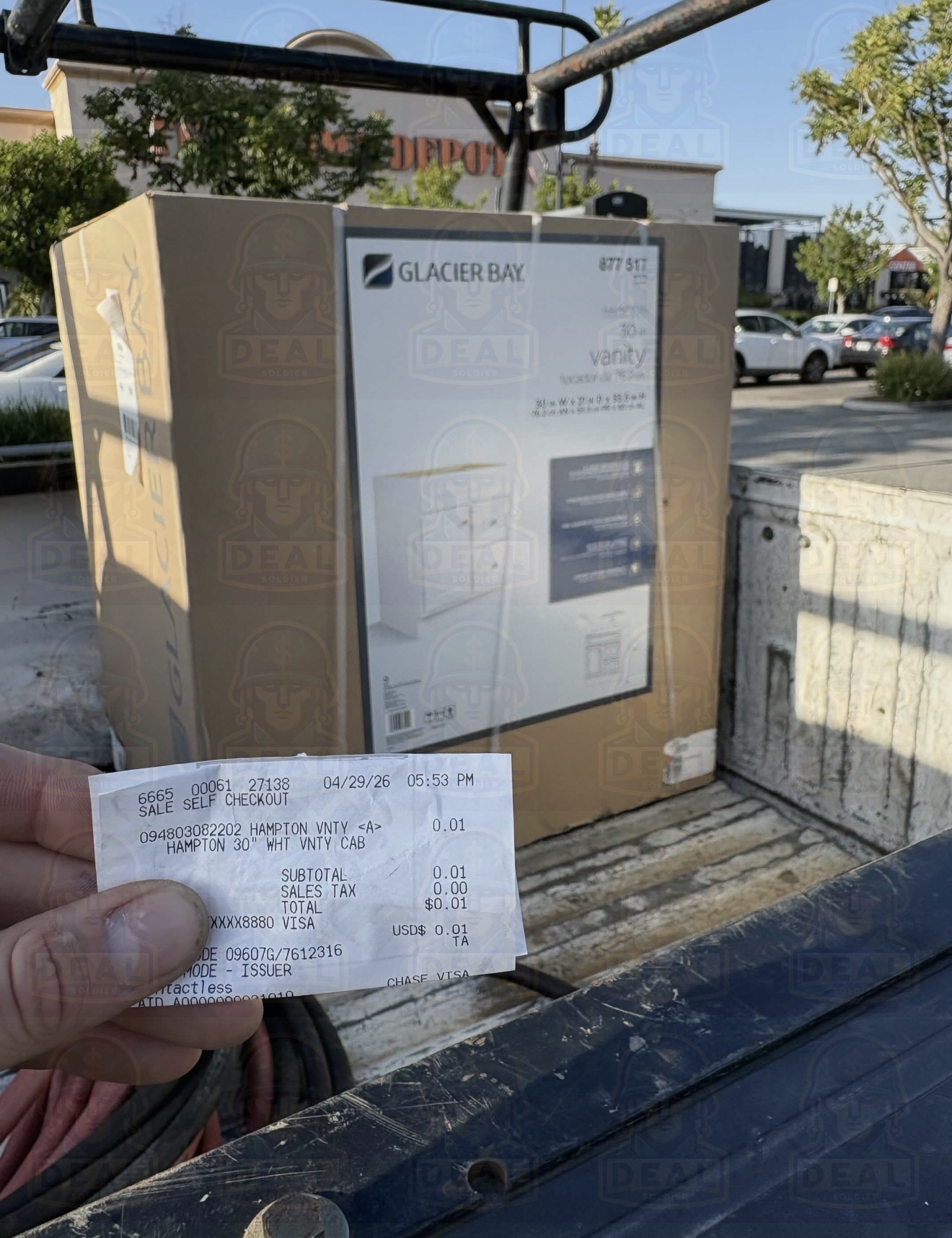
The receipt is as clean as it gets: “Hampton 30in WHT VNTY CAB — $0.01. Subtotal $0.01. Tax $0.00. Total $0.01,” charged to a Visa. The same cabinet retails around $450 depending on configuration.
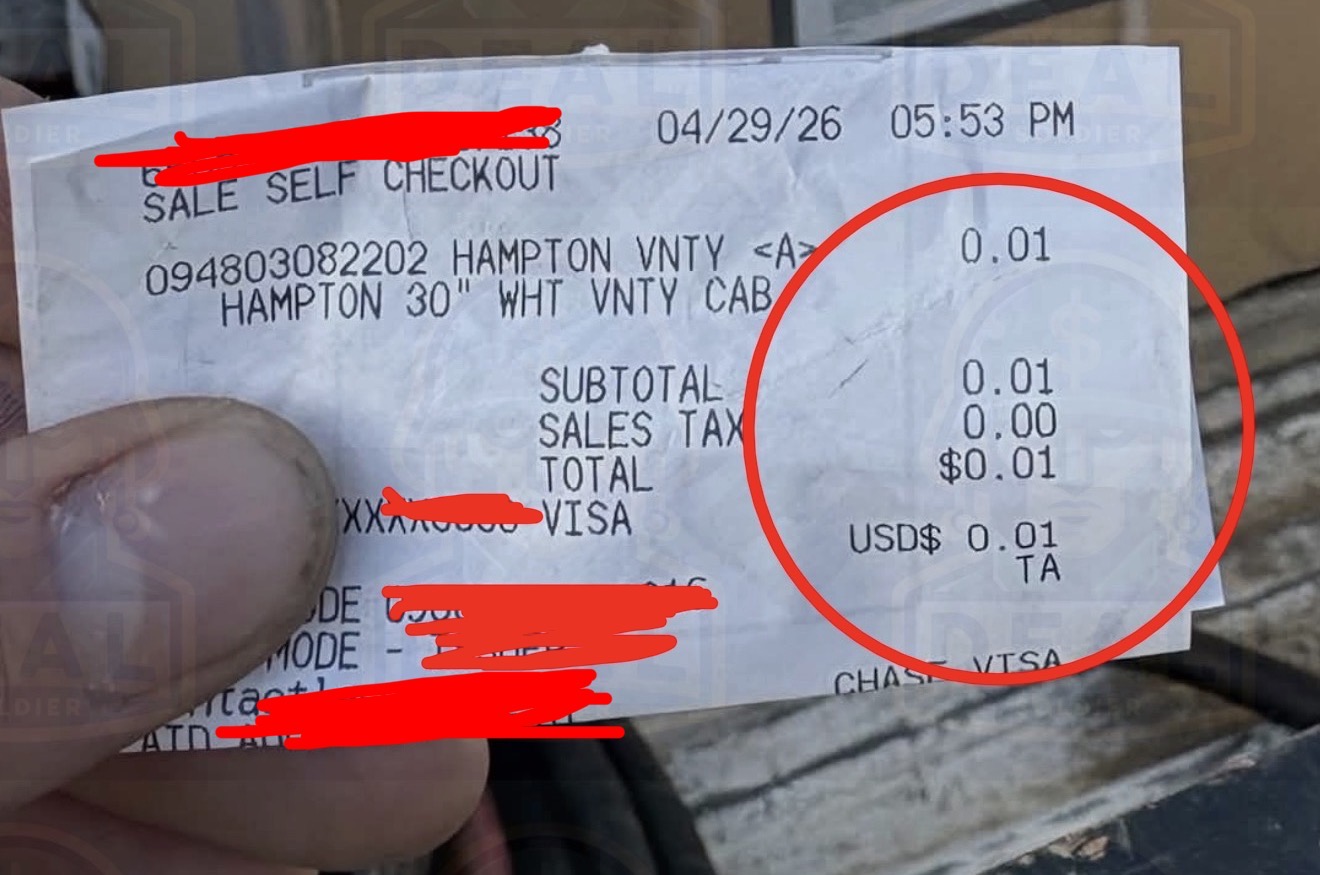
Vanities, cabinets, and tile are among the highest-margin penny categories because they penny out when product lines refresh or finishes change. The shelf tag almost never updates and the app usually shows the SKU as unavailable — the register is the only confirmation that counts.
“Penny item — Ya regresé, gracias por todo”
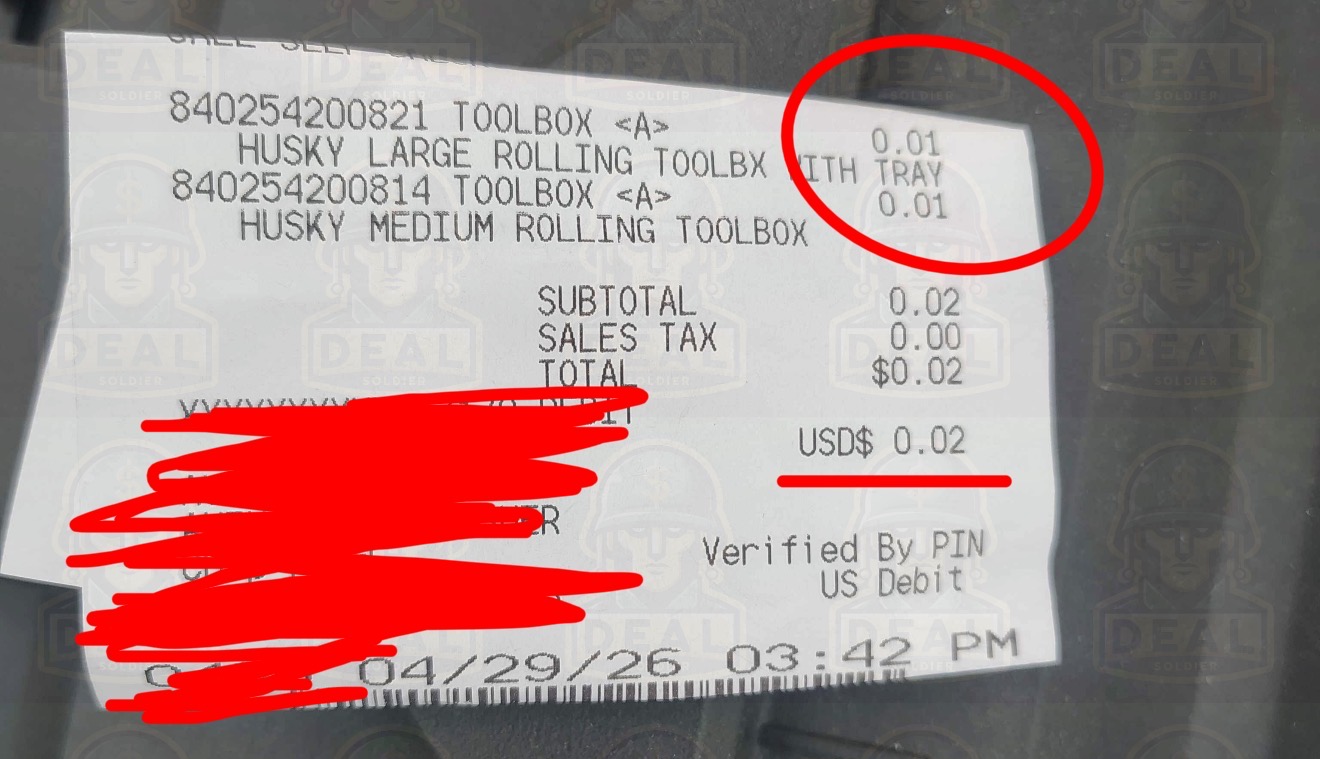
On the same afternoon — April 29, 2026 at 3:42 PM — Alfredo caught two Husky rolling toolboxes on one trip. Both rang up at $0.01 at self-checkout: the Husky Large Rolling Toolbox with Tray (retails around $129) and the Medium Rolling Toolbox ($79–$99).
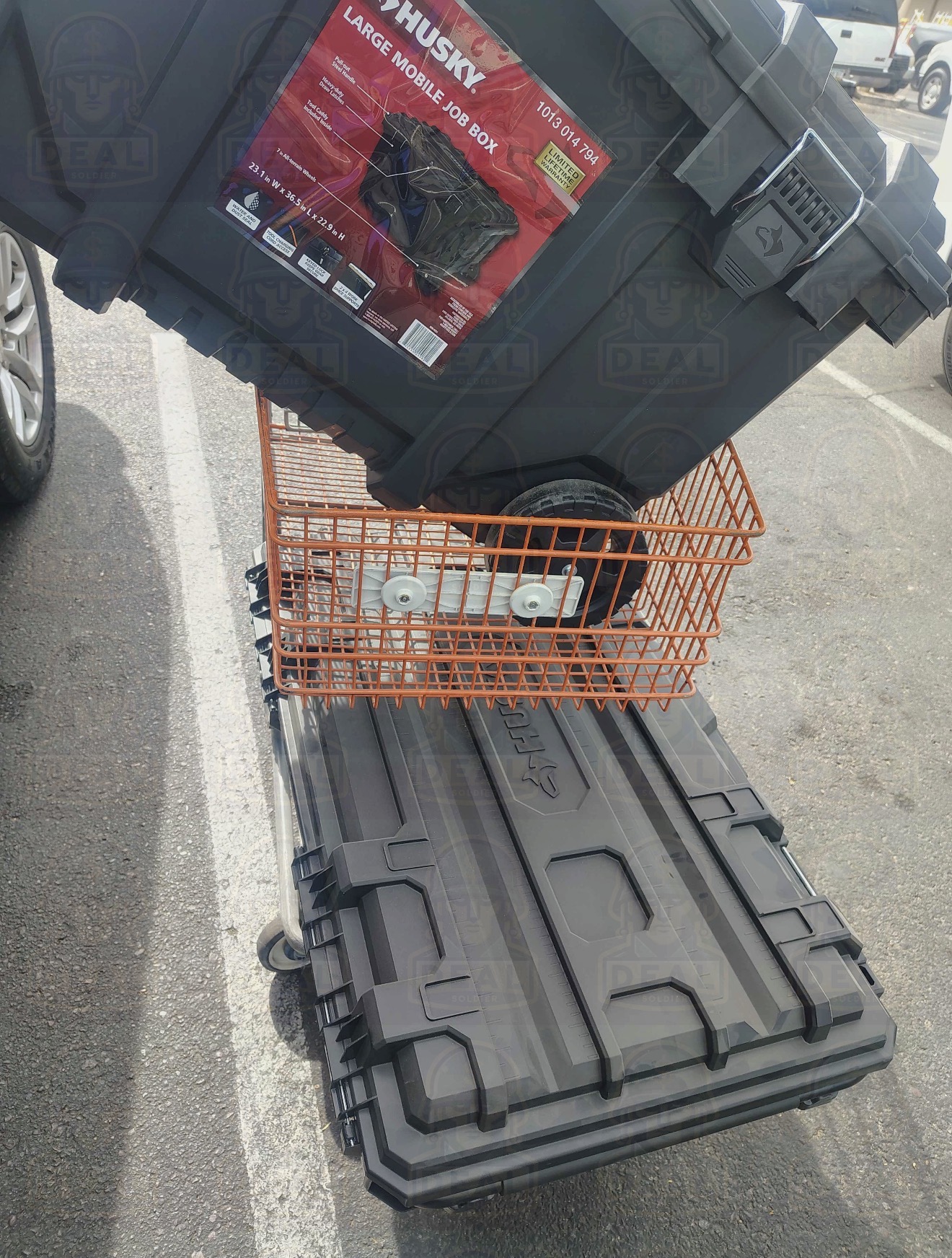
The receipt lists both SKUs in plain text at $0.01 each — subtotal $0.02, tax $0.00, total $0.02, paid by debit and verified by PIN. Two cents for roughly $200 in tool storage. Husky products penny out regularly when lines refresh or packaging updates.
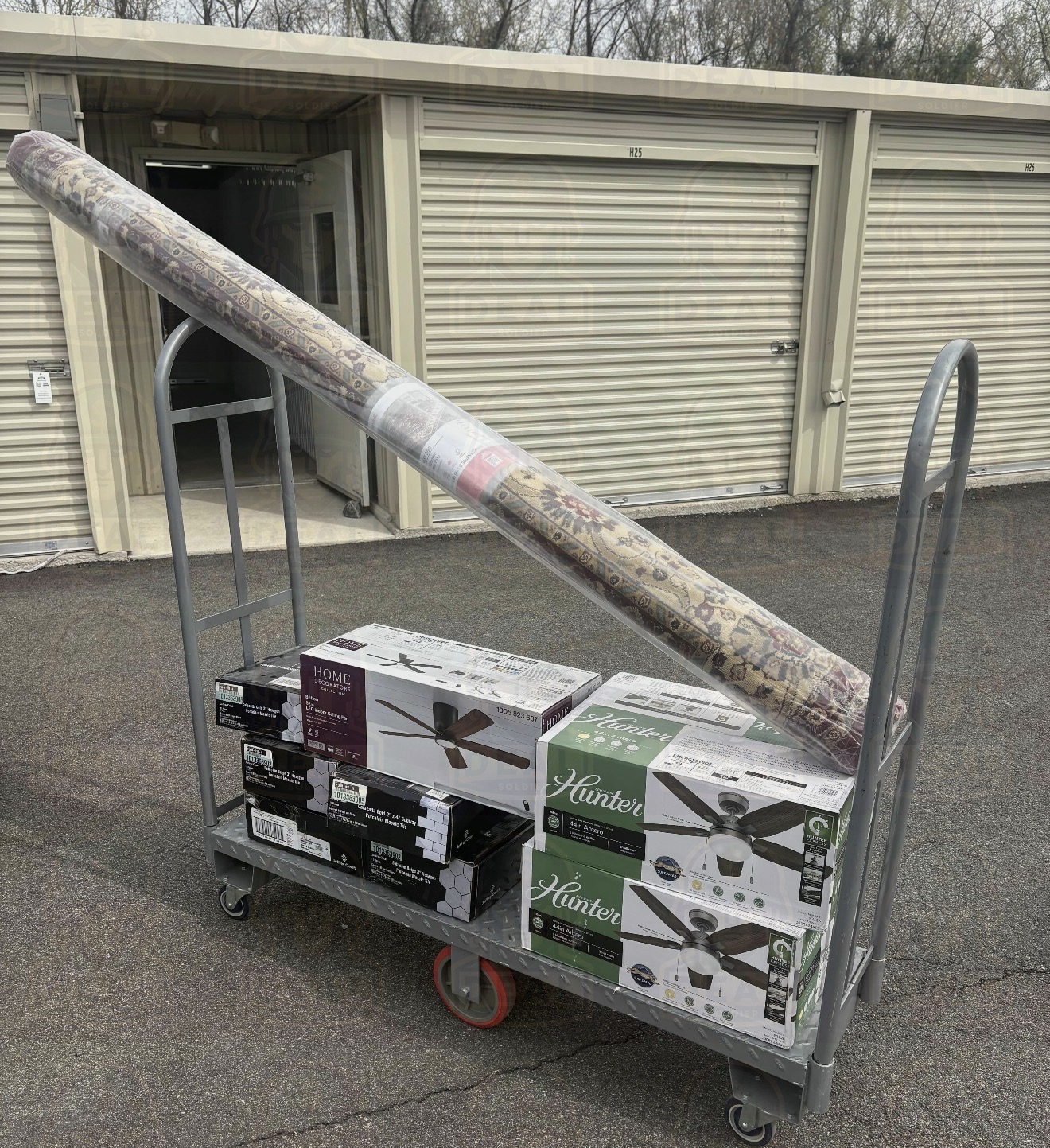
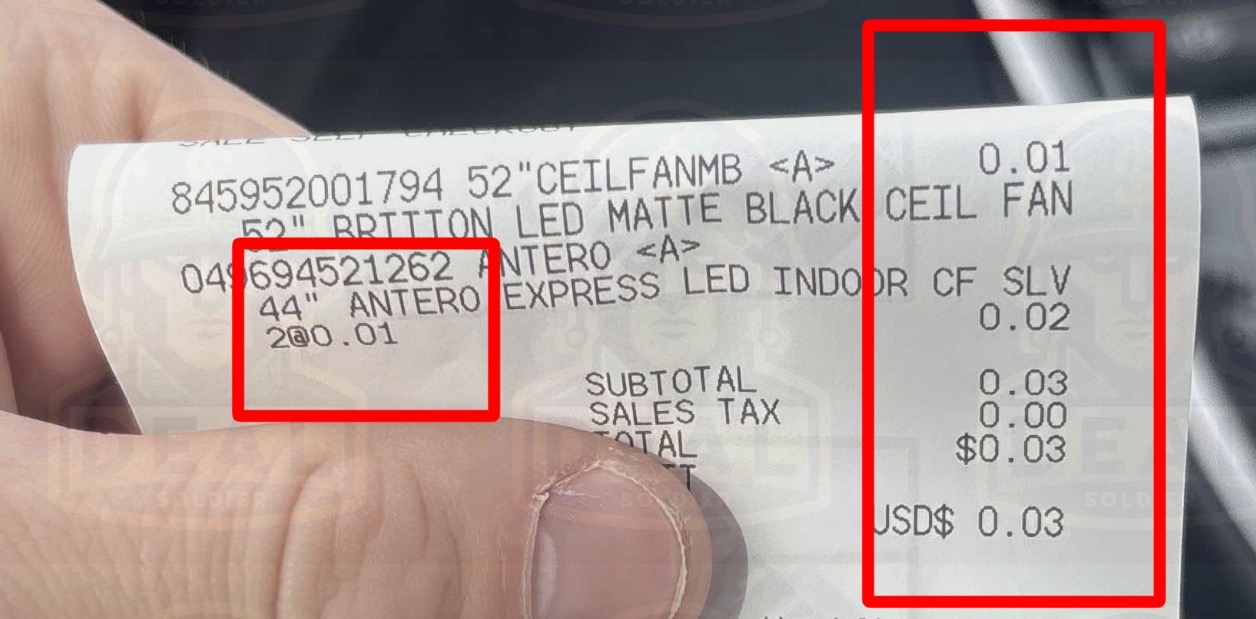
“Pretty good penny haul today, over $1,000 retail easily between 3 ceiling fans, 55 pieces of wall tile and a massive rug”
This shopper worked three separate Home Depot runs in a single morning on April 29, 2026, catching different SKUs as they dropped through the system. Three receipts, three categories, three penny windows — all caught.
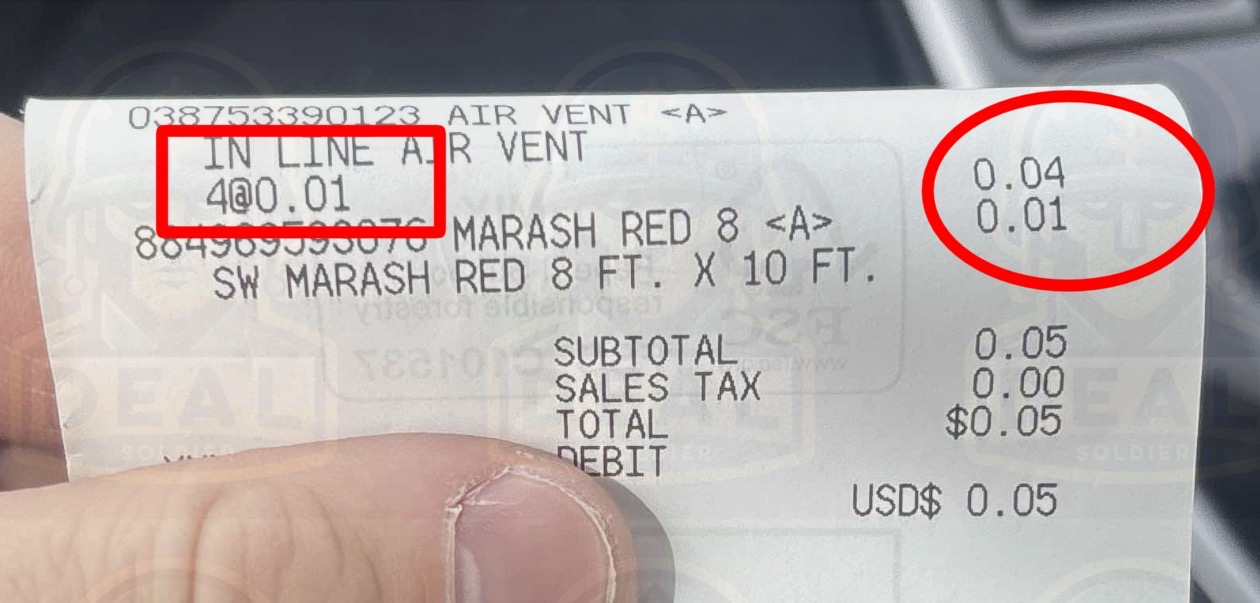
Trip one was tile: 55 pieces of porcelain mosaic and subway wall tile across five SKUs — Hex Bottiicino, Sub Calacatta, Ivory Light Mosaic, and Hex Calacatta varieties — for $0.58. Trip two added four in-line air vents at $0.01 each plus a Marash Red 8×10 area rug (retails $300–$500) at $0.01, for a $0.05 total.
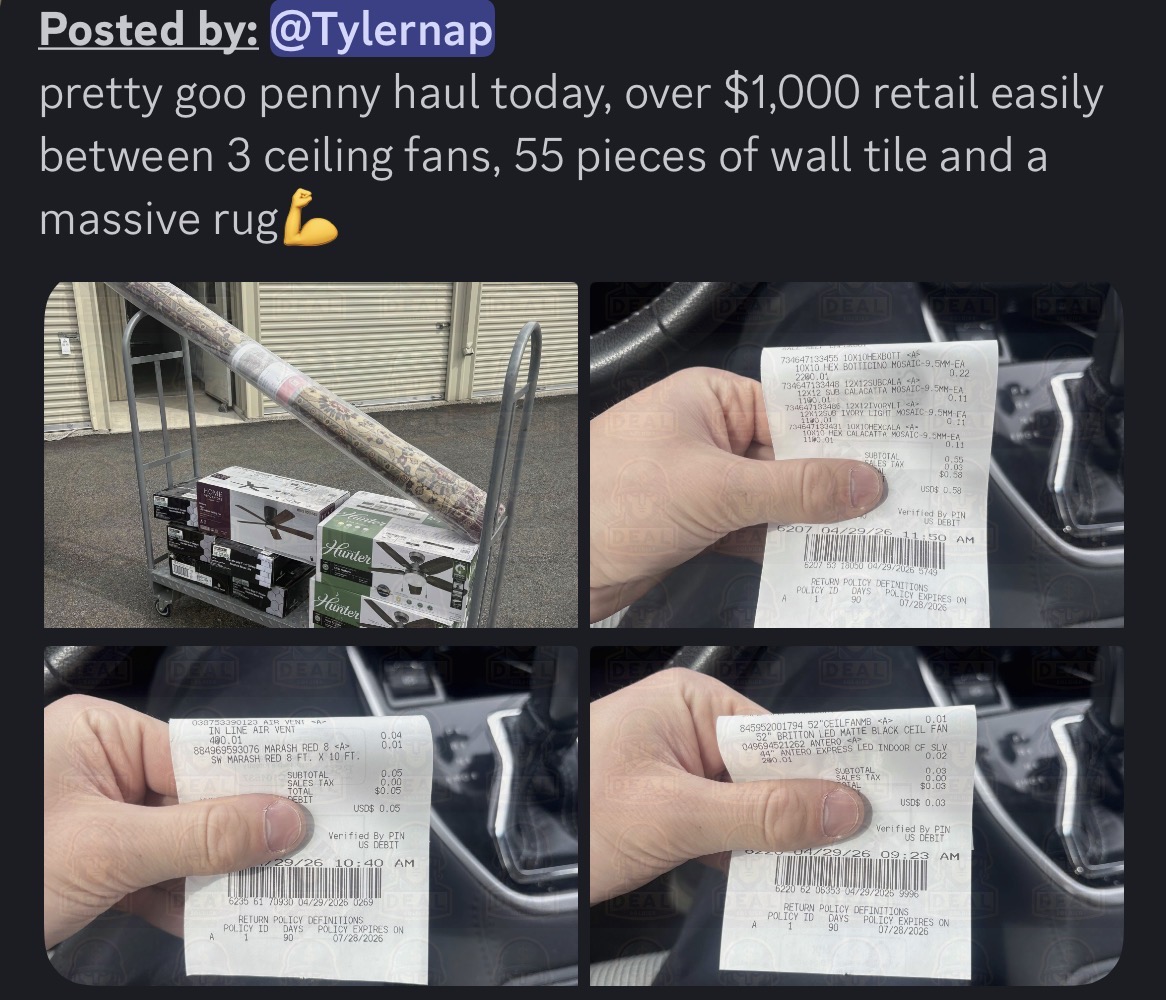
Trip three was ceiling fans: a 52-inch Britton matte black LED fan and two 44-inch Antero Express LED fans, all at $0.01 — three name-brand fans for three cents. Across all three receipts: one rug, three fans, four vents, and 55 pieces of tile for $0.66 against a conservative retail value over $1,000.
Penny items are not a glitch and not a promotion. They are the final stage of Home Depot’s continuous markdown system doing exactly what it was built to do.
Home Depot runs a rolling markdown cycle on nearly every SKU. When a product is discontinued, a package refreshes, a model gets replaced, or inventory needs to clear, the system steps the price down: full retail, 50% off, deeper cuts — and for certain items, all the way to the floor of $0.01.
One cent is the system’s way of saying “this item should already be gone.” It is the price of removal, not the price of promotion — which is exactly why nobody advertises it.
When a SKU hits $0.01, the shelf tag is rarely updated. The clearance sticker may be missing entirely. The website often shows the original price, and the Home Depot app usually reports the item as unavailable rather than as a penny.
None of the customer-facing surfaces tell you the truth. The only place the penny price actually appears is the register itself.
This trips up almost every guide on the internet: scanning a penny item in the app or at a price checker usually shows “unavailable,” not $0.01. The only true confirmation is ringing it up. If it scans at one cent, you pay one cent and walk out.
Because the system flags penny items for removal, employees pull them off the floor when they spot them. That is their job and their right. Respect Home Depot staff — the penny game is about being faster than the pull, never about working around people.
Penny items can surface in nearly any department, but they follow patterns — and the shoppers who win are the ones who arrive first, not the ones who scan longest.
Check the back corners, bottom shelves, overstock racks, and clearance end caps in the departments that penny out most: tools, lighting and ceiling fans, vanities and bath, paint, tile and flooring, garden, seasonal, and storage.
Some of the deepest finds are not in clearance sections at all. They sit on the regular shelf with the original price tag attached and only reveal themselves when the SKU is rung up.
The window between a SKU dropping to a penny and an employee pulling it can be short — sometimes minutes. Walking aisles and scanning at random is the slow way to lose that race.
A live tracker flips the order: you learn about the drop the moment it happens, then drive. That is the entire difference between shoppers who find pennies weekly and shoppers who find one a year.
There is no single “penny day.” Markdowns process continuously, and new penny SKUs load into the system overnight and in early-morning batches. Early morning is the best time to catch fresh drops before anyone else scans them.
Monday through Wednesday tends to produce more fresh drops than weekends, and seasonal categories follow predictable post-holiday cycles.
Every documented find on this page comes from one of these categories — they cycle onto penny pricing whenever product lines refresh.
Husky toolboxes, drill bits, hand tools, and storage penny out when lines update. Alfredo’s two rolling toolboxes for $0.02 above is the pattern in action.
Hunter, Home Decorators Collection, and Britton fans hit penny pricing when models refresh. One documented run pulled three fans at $0.01 each in one morning.
Glacier Bay and Hampton vanities, faucets, and fixtures penny out when collections rotate. TokenJack’s $450 vanity for one cent came from this cycle.
Clearance lines in mosaic, subway tile, and vinyl flooring drop when colors discontinue — one documented haul had 55 pieces of wall tile ring up for $0.58.
USI and First Alert smoke and CO detectors penny out when product generations refresh. Andydeal1’s 42-detector haul for $0.21 is the proof.
Behr paint, Vigoro garden products, and seasonal merchandise all reach the penny floor, with seasonal following predictable post-holiday markdown cycles.
The receipts above were printed by Home Depot’s own registers. Here is where penny buying stands — honestly.
Every find on this page includes real photos, real receipts, and real transactions processed by Home Depot’s registers. New finds like these are documented every week across the country.
You pay the price the store set in its own register system — a standard retail transaction. No deception, no exploitation. The system price is the legal price, and reselling what you bought is legal too.
Home Depot publishes no policy about $0.01 items because penny pricing is just the markdown system reaching its floor. Some stores set informal per-customer limits, and a manager can refuse a sale at their discretion — showing up early with the right SKU is the practical fix.
The same product can be a penny at one store and full retail at another on the same day. That is why a single chain-wide penny list is impossible to keep current — and why local, live data wins.
Most pages about penny deals only show the wins. Here is the part they leave out.
Penny items drop in stores all over the country, but not every store has the same items on the same day. Metro shoppers with several stores in driving range find more than shoppers with one local store. Smaller markets still produce finds — just less often, across fewer categories.
Penny hunting is not passive. The shoppers who post hauls are the ones who check leads daily, scan in store regularly, and move fast when an alert lands. Look once and disappear, and you will get once-in-a-while results.
Most penny transactions process without comment. Occasionally an employee unfamiliar with penny pricing resists at the register; a manager check usually resolves it, since the system price is the store’s own price. Stay polite, and walk away if the store declines — protecting your welcome matters more than any single item.
People search “penny items reddit” and “penny deals discord” looking for a free shortcut. Here is the honest comparison of how each source performs when a SKU drops.
Subreddits document genuine penny items — after the poster has already cleared the shelf. By the time you read it, the SKU is gone from that store. Useful as proof it happens; useless as a live signal.
Open servers move quicker than Reddit, but a hot SKU posted to thousands of people gets cleared at every store within minutes. “All gone” replies often land in the same minute as the find.
The member board tracks penny SKUs with store-ready UPC barcodes, state-by-state confirmation signals, and Telegram alerts for your area — so the lead reaches you before the crowd, not after it.
Penny buying turns into clutter fast. Before anything goes in your cart, decide why it deserves space in your car and your home.
Buy it when it solves a real need for your home soon.
Buy it only when you already know who will use it.
Buy it when a school, shelter, church, or nonprofit can use it quickly.
Buy resale items only when demand, storage, shipping, and margin are obvious.
Leave clutter, damaged items, oversized items, and low-demand duplicates behind.
Products marked down to $0.01 in Home Depot’s internal SKU system. The shelf may still show the original price, but the register charges one cent. You pay a penny and walk out with the item.
Yes — and verifiable. The finds on this page show real carts, real receipts, and real register transactions, all documented with photos on April 29, 2026. New finds are documented every week.
Take the item to the register and ring it up — that is the only true confirmation. The Home Depot app hides penny prices, usually showing the SKU as unavailable. A live penny tracker with alerts tells you what to check before you drive, which is the real shortcut.
Continuously. New penny SKUs load into the system every morning as the markdown cycle processes, and shoppers find them every day across the country.
Tools, ceiling fans, vanities, tile, smoke detectors, paint, garden, and seasonal items penny out most consistently.
No. When a SKU drops to a penny, the app typically shows it as unavailable or still at full retail. There is no official Home Depot penny finder — third-party trackers and communities fill that gap.
No official one exists, because penny pricing is set per store and changes daily. Public lists on Reddit or blogs are usually stale within hours. The closest thing to a live list is a tracked board of confirmed $0.01 SKUs updated continuously — which is what 1centfinds runs.
Yes. You pay the price the store set in its own register system, which is a normal retail transaction. The system price is the legal price.
There is no published penny policy. Penny pricing is a side effect of the standard markdown cycle reaching the $0.01 floor. Some stores set informal quantity limits, and managers can refuse a sale at their discretion.
Yes. Penny SKUs are flagged for removal, so staff pull them when spotted, and a manager can decline the sale. Most transactions go through without comment — being early, polite, and ready to walk away is the winning posture.
Yes. Many shoppers resell penny items online or use them in rental and flip projects. At a one-cent buy price, even modest resale prices produce strong margin.
No. Walmart and Home Depot run different markdown systems. Hidden clearance at Walmart rarely reaches one cent, while Home Depot’s cycle regularly bottoms out at $0.01 — penny items are far more common at Home Depot.
This page tells you how penny items work — it can’t tell you what is on penny pricing at your local store today. The 1centfinds live board tracks penny SKUs with store-ready UPC barcodes, state confirmation signals, and instant local alerts, refreshed every day.